MSA Worldwide Blog
MSA WORLDWIDE AWARDED HALL OF FAME AWARD
October 17th, 2012
Contact: Irene Ludemann
Telephone Number: 860-231-1290
Email: iludemann@msaworldwide.com
First Hall Of Fame Award Recipient From Franchise Update Media
Franchise Update Media Group at its Annual Franchise Development and Leadership Conference in Atlanta presented MSA Worldwide with its inaugural Hall of Fame Award.
We are thrilled to be recognized for our contribution to franchising, said Michael Seid, Managing Director of MSA Worldwide. Receiving this inaugural Hall of Fame Award is very special for me. I have known Therese Thilgen and Gary Gardner, the founders of Franchise Update Media, since they began Franchise Update Magazine. Over the years they have created the most important independent conference and media brand for professionals in franchising today. Our receiving this acknowledgement for our achievements and contribution to franchising from Franchise Update Media and, being thanked for playing a small part in their success, is very satisfying.
“MSA has provided professional guidance; best practices and services to franchisors and franchisees that have helped franchise organizations grow healthier and more successful systems. We are pleased to recognize them for their historic achievements and contributions to franchising and for their twelve years of contributing to the Annual Franchise Development and Leadership Conference.” Steve Olson, CFE, President, Franchise Update Media Group.
The entire MSA team is honored by this award,” said Kay Ainsley, Managing Director of MSA Worldwide. It has always been our philosophy that our success is best measured by the success of our clients and we work extremely hard to make that a reality. We know the importance of giving back to the franchising community. We are proud to be able to contribute our time and resources to support the International Franchise Association and important societal issues like our veterans and social franchising worldwide. We are grateful to Franchise Update Media for recognizing our efforts.”
AB 2305, “The Level Playing Field for Small Businesses Act of 2012” – What is going on in California today?
April 9th, 2012
By: Michael Seid, Managing Director, MSA Worldwide
Franchise Law News – 2nd Quarter Edition, 2012
You have to be concerned about what the folks in California’s state capitol of Sacramento are thinking about these days. The California economy is in the tank with statewide unemployment nearing 11% and minority and youth unemployment even higher than that. People and businesses are leaving the state because of record-high taxes and California’s history of excessive regulation, and get this, Governor Brown’s solution is to raise both the sales tax and the income tax to try and balance the state’s budget. Please tell me you’re kidding, Governor? Apparently not. The last time Jerry Brown did something this foolish was when he stopped dating Linda Ronstadt back in the 70s.
In what can only be described charitably as a misguided undertaking, an Assemblyman in California has decided that one of the few bright economic stars still shining in California – its strong and relatively problem-free franchising economy, needs to be restrained. It is curious, given the state’s depressed economic climate, that anyone in California would think now is a good time to propose a sweeping anti-franchising measure like AB 2305, “The Level Playing Field for Small Businesses Act of 2012”. According to the International Franchise Association, California has 83,000 franchised locations generating $94 billion in economic output and employs 925,000 workers. Franchising is a large, growing and relatively problem-free part of the California economy.
Now what can be driving the Assemblyman? It can’t be the results of any empirical research showing that there is an endemic problem in California franchising. None exists. It can’t be that there is an increase in franchisee litigation or complaints in California either. There are relatively few franchisee complaints and a very small percentage of lawsuits filed against franchisors in California, especially when compared against the number of franchisees in the state. It certainly can’t be that franchising is under-regulated in California. After all, California’s CFIL and CFRA are some of the strictest franchise disclosure, registration and relationship laws in the United States.
So, what can it possibly be? It could be that the handful – and it’s a relatively small handful – of franchisee advocates that have been pushing for increased relationship laws throughout the United States for many years, have the Assemblyman’s ear and have told him about “their perception” of relationship problems in the franchising industry. Perhaps they forgot to mention to the Assemblyman that the Federal Trade Commission completed a decade-long review in 2007 and revised the disclosure laws in the United States. When asked by these same franchisee advocates to establish franchise relationship laws in the United States the FTC replied that federal relationship laws were not needed as there was inadequate “evidence to support a finding of prevalent acts or practices that meet each of the three prerequisites for unfairness….” Franchise regulations work quite well in California and in the rest of the United States. Relationship laws like the one being proposed in California are simply not needed.
Quite possibly, the Assemblyman may simply not understand the dynamics of franchising. A clue to what he knows and understands might be found in a recent interview he gave. According to the interview, the Assemblyman seems to think that most franchisors are large businesses with legions of lawyers. Most franchisors in California are small businesses and with the exception of mega-large franchisors such as IHOP and The UPS Store (both California-based), which are not the target of this regulation, franchisors in the United States on average have less than 100 locations in total.
The Assemblyman may not fully understand that California’s franchisee centric CFIL and CFRA laws were originally put into place to reduce conflict in the franchise relationship and that the existing laws already require franchisors to clearly detail the duties and responsibilities of the parties in a California mandated disclosure document. Under both federal and state law, that information is provided to prospective franchisees weeks before they make their investment decision. The franchise regulators in California are widely considered to be some of the most diligent in the United States and they review each franchise offering before franchisors are allowed to register and begin offering franchises in the state.
There are so many problems with this law it’s hard to find a place to begin and my space in this article is very limited. But clearly, the premise of the law is mistaken – a “Level Playing Field”. For the protection of consumers, franchisees and franchisors, franchising can never and should never be a level playing field. As the owners of their intellectual property franchisors have the right, and under federal law, the obligation to control how their brand is licensed. Franchisors are required under federal law to control how others use their intellectual property. To meet these requirements franchisors establish, monitor and enforce standards. The reason the Lanham Act was enacted and why franchising cannot be a level field is that the consuming public needs to be protected.
Another problem with the bill is that its author does not seem to comprehend that an investor can choose from many active and passive investment opportunities including becoming a franchisee or opening their own independent business. This is the same decision all franchisors have to make at some point in time when they were beginning the business that they later might choose to franchise. If investors choose to become franchisees they have the opportunity to select from thousands of franchise opportunities available in California and they can make their business decisions based on the abundance of publicly available information. Some of this information is included in the disclosure document mandated by the State of California that details each party’s rights and obligations. Many people choose not to become a franchisee because the terms contained in the franchisor’s offerings do not meet their investment requirements. Others don’t become franchisees because of the restrictions and obligations required by the franchisor over the use of the franchisor’s personal property. Some don’t become franchisees because they have an idea and wish to risk going it alone so down the road they can become franchisors. Franchising is simply one method in which to get into business but it’s not right for everyone.
The bill mandates terms that all franchisors will be required to include in their California contracts and grants new and expansive rights to franchisees including a perpetual right to use a franchisor’s property, the elimination of post term covenants and restrictions on a franchisor’s right to place locations where customers shop. The bill fails to address the economic harm caused as it strips from franchisors significant personal property rights without any compensation. I am very uncertain as to why anyone would think this is either fair or creates a level playing field, or that it is wise to dramatically limit a franchisor’s rights to enforce its standards, and by doing so create unintended risks for consumers in California.
Certainly Californians will be inconvenienced, as franchisors will be unable under the law to open locations throughout the state. Companies like Starbucks, which are not franchised, are free to place their locations wherever they think they are needed to best serve their existing and prospective customers, but that will not be possible for franchisors in California if this ill-advised bill is passed. Even with mandated pre-sale disclosure of the territorial rights granted to franchisees, AB 2305 prevents franchise systems from doing the same thing. This will take away the franchisor’s ability to establish critical mass in markets in California, which will put them at a competitive disadvantage with other brands.
The rule does not even make sense economically as under the law a new location cannot have more than a six percent impact during the first 12 months on an established franchised location. As franchising is used in over 120 different industries and many of those industries do not even have fixed locations, it is unclear how this type of fungible approach could even work. The law certainly does not seem to recognize that initial locations usually do extremely well and the second location will always have impact on them when they open. The law does not tell what the correct sales a business should even have. For example, if a restaurant system averages $100,000 sales a month per location and the first franchisee in a market achieves $500,000 in sales, if the second location opens and the combine sales of the two locations remain at $500,000, under AB 2305, the franchisor can’t have two locations. Under this example the market might hold five locations but the franchisor would be limited to only one since they could not impact the first location by opening the second location. I am not sure how that is a level or fair playing field either.

Imagine if AB 2305 was the law in California back to the 1950s. In addition to having only one baseball team and one football team in Los Angeles, you would have only one Marriott hotel, one McDonald’s and if they were a franchisor only one In-n-Out Burger. Territorial rights granted by a franchisor in California should simply state what is clearly disclosed in the offering documents provided to franchisees as it is elsewhere. If the prospect does not like the terms, then they don’t have to become a franchisee or can choose another franchise offering from another brand.

AB 2305 also requires that a franchisor must be competent, which sounds so reasonable. But this requirement is unsupported by any empirical studies that there is any problem with franchisor competence today. When Congress looked at this issue a decade ago, they found it was not needed. Besides, competency is not even defined or measurable and therefore is simply not good public policy. This duty will result in massive amounts of litigation, and likely creates such a risk that it may effectively stop all franchising activity in California. Let’s consider that the bill does not answer any of these truly simple questions.
- Will there be big franchisor competency standards and small franchisor competency standards and does the industry matter?
- Will the standard be the same for new and mature franchisors? If they are the same for all, how will a new franchisor meet the same standard as achieved by IHOP, The UPS Store or McDonald’s? Under the law would Pinkberry have been allowed to offer franchises in California since it did not have the same competency as Baskin-Robbins when they began to franchise?
- Will the state accept the Certified Franchise Executive designation issued by the International Franchise Association as an indication of competency? If not the IFA, who will determine if a franchisor is competent? Franchisee advocates? Franchise regulators? The courts?
This bill also contains prohibitions and limitations on termination, renewal rights and post-term covenants. It has the unintended consequence of cutting the benefits franchisees look for in any franchise system and puts franchisees and their equity value at heightened risk from the actions of other franchisees. It takes from franchisors substantial value they have in their personal property and transfers that value to some franchisees, without any compensation. It is a radical departure from how business is conducted in the United States.
Where are the limits under the law and how far will California go to dictate the terms of the franchise offering? Will regulators next want to determine the length, curriculum, cost and who is required to attend initial training? Clearly training is very important. Will regulators be able to mandate the frequency and scope of franchisor provided field support visits? Field support is also important. Perhaps the regulators will want to determine fees and mandate a minimum acceptable return on investment before a franchise is even offered.
California is an important market and franchisors will most likely continue to expand in California, but I suspect that they will first look elsewhere for growth and possibly limit their California expansion to non-franchisee owned locations (in other words, company-owned stores). Franchisees will be seriously damaged, as opportunities for investment available in other states may not be available to them in California. The bill puts consumers at a higher risk because of the restrictions on a franchisor’s ability to maintain and control their standards and will certainly limit their convenience.
Because of these and other problems, I trust that sane heads in California will understand the problems with AB 2305 and following the scheduled hearing, decide not to advance the measure.
The franchising industry continues to grow in the United States despite a still sluggish and uneven economic recovery, with nearly 825,000 establishments, supporting nearly 18 million jobs (direct and indirect) and $2.1 trillion in economic activity, representing 3% of overall U.S. GDP. The reason? It’s a proven, structured and a very scalable model. More important it is fair. The terms of the franchisor’s offering is clearly defined and presented to the prospective franchisee, for their evaluation and determination, well in advance of their making any decision about becoming a franchisee. That is the law in the United States, including California.
Clearly it’s time to begin to understand why relationship laws are even contemplated and for franchising to do a better job of educating elected officials on why they are not needed or beneficial. The real facts are that relationship laws have not been a positive addition to franchising and franchisees, franchisors and consumers have been negatively impacted because of them.
Private and Public Partnership to increase access to healthcare services in Rwanda
April 9th, 2012
REPUBLIC OF RWANDA
Ministry of Health
PRESS RELEASE
Private and Public Partnership to increase access to healthcare services in Rwanda
3 April 2012, Kigali – A new partnership is announced today which brings together One Family Health (OFH) Foundation, GSK, Ecobank, on one hand and Healthstore Holdings (HSH) and the Rwandan Ministry of Health on the other, in a coordinated effort to establish 240 health posts across Rwanda over the next three years. With support from the Ministry of Health, this innovative partnership aims to increase access to high quality essential medicines and basic healthcare for around two million people per year in rural communities in Rwanda. This is the first step in an overall ambition to create up to 500 health posts in Rwanda over the next seven years as per a public-private partnership between the Ministry of Health and HSH, and in alignment with the Rwandan Government’s Vision 2020.
This health post model, known as Child and Family Wellness (CFW) Health Posts, will operate under a business-format franchise network. They will be run by experienced nurses providing an entry point into the formal Rwandan public health system. This franchise model, which has been successfully piloted in Kenya, will give nurses joining the franchise access to finance and training in finance management, enabling them to earn a living whilst also increasing access to high quality essential medicines and basic healthcare for their local communities.
CFW is a Social Sector Franchise and is a member of the International Franchise Association’s (IFA) Social Sector Franchise Task Force. Two of OFH’S directors, Michael Seid and Sid Feltenstein serve on the IFA Board of Directors (Washington, DC) as member and Chair of the Social Sector Task Force and as Past Chairman of the association, respectfully.
GSK has already committed £900,000 to HSH to get an initial 60 health posts up and running. Under the terms of the new partnership, GSK will provide £1.8million in new funding as an interest free loan to enable HSH expand the franchise network by a further 180 health posts. The Rwandan Ministry of Health will facilitate the availability of designated physical structures for CFW Health Posts and specifications as required under this Partnership. Negotiations are at an advanced stage within Ecobank for nurses buying into the franchise to receive loans at affordable rates through Donor subsidies. Both GSK and Ecobank will contribute to a bursary to enable continued nurse training and development. HSH, the for-profit entity behind the franchise, will provide ongoing training, mentoring and expertise to support the nurse franchisees.
The Minister of Health Dr. Agnes Binagwaho hailed the partnership saying it would add value to the quality of health care provided and bring health care services closer to the communities.
“With this partnership, we are assured of quality of health care extended to our people including more accessibility to drugs especially in remote areas which eventually leads to our ultimate goal of having a healthy population for economic development,” Minister Binagwaho said.
Commenting on the partnership, Duncan Learmouth, SVP, Developing Countries and Market Access, GSK said: “I am delighted that GSK, Ecobank, HSH and the Rwandan Ministry of Health have come together in this innovative partnership focused on expanding access to medicines for communities in Rwanda. We believe this franchise model has great potential for success and could be expanded beyond Rwanda.”
Sub-Saharan Africa has to meet 24% of the world’s health burden with only 3% of the world’s healthcare workforce and only 1% of the global health budget.
Contacts
For Ministry of Health
Mr. Arthur Asiimwe, +250 788312517, Arthur.asiimwe@rbc.gov.rw
Leading Healthstore Board Member Joins Board of International Franchise Association
October 6th, 2011
“On behalf of the board of directors, management and the whole team at The HealthStore Foundation® I would like to take this occasion to congratulate Michael Seid on his election to the Board of Directors of the International Franchise Association (IFA). As one of the most active and effective members of our own Board of Directors, and as our Chief Concept Officer, Michael and his firm, MSA Worldwide, have rolled up their sleeves to develop our franchise system for nearly seven years. And besides all the help he has been to our mission, Michael has also founded and chaired the Social Sector Franchising Task Force of the IFA. No one person in the world is more skilled or better equipped than Michael to bring together the commercial franchise community with the thousands of individuals and organizations now poised to extend the benefits of franchising to millions throughout the world who can now only hope to one day enjoy the health, education, nutrition, safety and prosperity that we in the rich world have enjoyed for so many years. On behalf of us all at HealthStore, I wish Michael the very best as he leads the way ahead and pledge any help we can be to his efforts.”
- Scott D. Hillstrom, Chairman, The HealthStore Foundation®
Michael Seid Addresses Graduate Students at Harvard Business School
October 3rd, 2011
Michael Seid, Managing Director of MSA Worldwide addressed three classes of graduate students taking the Business at the Base of the Pyramid course at Harvard Business School on September 28, 2011. Together with Scott Hillstrom, Chairman of the HealthStore Foundation and Greg Starbird, Chief Operating Officer of CFWShops Michael discussed the recent Harvard Case Study “CFW Clinics in Kenya: To Profit or Not for Profit authored by Professor V. Kasturi Rangan and Graduate Assistant Katherine Lee. The case study examined the CFWShops franchise system in Sub-Saharan Africa.
Led by Professors Michael Chu, Shawn Cole and Kash Rangan the three classes of approximately 175 graduate students examined the question of CFWShops Social Sector Franchise changing from a not-for-profit structure to a for-profit franchisor. During the classes the students discussed the changes they recommended to improve the economic performance of the franchise system and the risks and benefits to CFWShops and its franchisees as a for-profit franchise system. Some of the conclusions presented by the students included recommendations concerning locating new clinics operated by franchisees in urban areas instead of the current peri-urban areas, adding additional methods for the delivery of medical care on an out of clinic basis, changes to CFWShops supply chain and separating fees charged to patients for medical examinations from the current bundling of medical services and prescribed medication. The case study is available to download at http://hbr.org/product/cfw-clinics-in-kenya-to-profit-or-not-for-profit/an/512006-PDF-ENG?N=4294958507&Ntt=V.+Kasturi+Rangan.
Michael will be speaking in November at the First Global Conference on Social Franchising in Mombasa, Kenya and the 8th Annual US-Africa Business Summit; Franchise Africa Workshop in Washington, DC in October.
Four Questions to Ask a Franchise Consultant
September 28th, 2011
You probably realize that you need more than just legal agreements and disclosures documents to be a successful franchisor. You might also be thinking that working with a franchise consultant, like MSA, could be beneficial. However, not all franchise consultants are created equal. Some will offer you the legal documents without discussing their longer-term consequences. Others will try and sell you on their knowledge, but not offer the strategic and tactical support services that will help you pull everything together.
Before you engage with a franchise consultant, here are four qualifying questions that we suggest you ask:
- Does your service offer a franchise feasibility study based on industry benchmarks?
- Do you have the experience to help me package my franchise offering based on what’s current?
- Do you have the resources to help me with developing my franchisee training and program package?
- Do you have the expertise to help me with franchisee recruitment and sales?
MSA franchise consultants offer both the strategic guidance and the tactical services, so clients’ franchising endeavors are more successful right out of the shoot and are more sustainable longer term.
Ask a Franchise Consultant If You Have What It Takes
September 26th, 2011
Simply drumming up the necessary capital to obtain your FDD (Franchise Disclosure Document) and sales material isn’t enough to seriously begin a franchise. You need to:
- Develop the right packaging and implementation of your system
- Determine whether customers like your product or service well enough to purchase it across town or in another city, and
- Verify that business (financially and operationally) can be duplicated
As you can see, there are quite a few considerations to think about. And based on our experience as franchise consultants, the earlier you think about them the better.
When MSA franchise consultants work with clients, we help them understand what it really takes to become a franchisor (both personally and financially). Here we share with you the helpful advice we share with our clients:
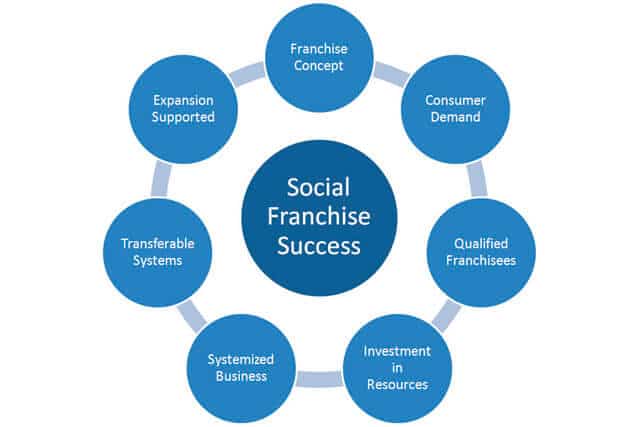
Criteria Needed for Franchising
An existing business: Do you have at least one year of solid financial and operational performance?
Consumer demand for your product or service: Is there demand for your product or service? Can you distinguish yourself from your competition? Do you have ownership of trademarks and service marks?
Management and commitment: Are you emotionally and financially committed to new endeavor? Do you have the resources to be adaptable to local market conditions and evolve your products and services over time?
Systemization: Can you deliver a “look” and marketable brand to franchisees? Are you able to tell franchisees how much it will cost to develop a location? As franchise consultants, we really want to stress the importance of this.
Skill transfer: Can you train others to do what you do or are the skills required so specialized that finding prospects could be difficult?
Economics of the business: Can franchisees be profitable after your fees and royalties?
If you’re able to say “yes” to the above criteria, then contact one of our franchise consultants to starting planning.
September 23rd, 2011
Michael Seid, Managing Director of MSA Worldwide, elected to the Board of Directors of the International Franchise Association.
West Hartford, CT, 23 September 2011. The International Franchise Association announced today that Michael Seid, Managing Director of MSA Worldwide was elected to the Board of Directors of the IFA during the associations board meeting held on 15 September in Washington DC. Michael will assume his board responsibilities on February 14th, 2012 at the conclusion of the IFA’s 52nd Annual Convention in Orlando.
As chairman of the IFA’s Supplier Forum Michael previously served on the IFA’s board of directors and executive committee in 1997 and 1998. He was elected to serve on the IFA board of directors in 2002, serving for six years, and was the first supplier member ever directly elected to its board in the IFA’s history. His election this week was as a franchisor member of the board in his position as Chief Concept Officer and a member of the Board of Directors and Executive Committee of CFWshops, a Social Sector franchisor in sub-Saharan Africa.
Michael also serves on the board and executive committee of the HealthStore Foundation and One Family Health, which demonstrates his commitment to the use of business format franchising as a method to improving the human condition and have a world changing impact on poverty, diseases and economic development. Michael is a frequent presenter at domestic and international conferences on the use of franchising technology in the social sector and has spoken at the Doha Economic Conference in Qatar on the use of franchising to create a middle class in the Middle East focused on dealing with the underlying economic causes of the Arab Spring. He currently serves as chairman of the IFA’s Social Sector Franchising Task Force,
Michael is also founder and Managing Director of MSA Worldwide, a domestic and international franchise consulting firm and as a member of Goldman Sachs’ Chambers Street Executive Network, serves as an advisor to GS’s Special Situations Group and serves on the board of public corporations.
Michael is a past chair of IFA’s VetFran Committee, currently serves on the IFA Finance and Budget Committee, VetFran Advisory Board and the President’s Council among several other IFA committees. He is a frequent speaker at programs for the IFA, IFA Educational Foundation, American Bar Association Forum on Franchising, universities, law schools, retail and professional organizations, and has published numerous articles and is the author of Franchising for Dummies, 2nd Edition published by Wiley Publishing, Inc. His co-author for Franchising for Dummies, 1st Edition, was the late Dave Thomas, Founder of Wendy’s International. Michael is a very non-practicing CPA licensed in New York State and has earned the designation of Certified Franchise Executive (CFE).
“Our new board members are a great addition to our Board with each having decades of experience in the franchising industry and the association,” said IFA Chairman Jack Earle, a multi-unit McDonald’s franchisee. “Their leadership will be critical as we address the challenges before us, including advocating for pro-growth policies that will help franchise businesses expand and create jobs.”
In addition to Michael, the IFA board elected:
- Liam Brown, Marriott Corporation;
- Rocco Fiorentino, Swiss Farm Stores;
- Margaret McEntire, Candy Bouquet;
- Catherine Monson, FASTSIGNS;
- Harry D. Loyle, CFE, chairman of ComForcare of Dayton, Ohio and managing director of Cybeck Capital Partners;
- Doug Allison—vice president of Industry Relations & Communications, PepsiCo Foodservice
- Carlton L. Curtis—vice president of Industry Affairs, Foodservice and Hospitality, Coca-Cola North America
- Aziz Hashim—president & CEO, National Restaurant Development Holdings
###
About the International Franchise Association
The International Franchise Association is the world’s oldest and largest organization representing franchising worldwide. Celebrating 50 years of excellence, education and advocacy, IFA protects, enhances and promotes franchising through government relations, media relations and educational programs. Through its awareness campaign highlighting the theme, Franchising: Building Local Businesses, One Opportunity at a Time, IFA promotes the nearly 18 million jobs and $2.1 trillion of economic output generated by franchising. IFA members include franchise companies in over 100 different business format categories, individual franchisees and companies that support the industry in marketing, law and business development.
MSA Worldwide Announces the Franchising For Dummies Seminar Series
August 25th, 2011
West Hartford, CT – 25 August 2011 – MSA Worldwide announces the first Franchising For Dummies™ Seminar Series to be held in the fall of 2011.
MSA Worldwide has partnered with the most prominent names in franchise law to present the first Franchising For Dummies seminar series to be held throughout the United States and Canada this fall.
Based on the highly successful book Franchising For Dummies, the seminar series will provide prospective franchisors information they need to decide whether franchising is the right expansion strategy for their company. Business owners will gain an understanding of the franchise regulatory scheme in their country, the requirements for the proper design and development of a successful franchise system, the anticipated investment required and the steps necessary to complete the franchise development process.
While compliance with franchise laws is necessary for the development of a franchise system, it is not sufficient for new franchisors simply to meet the regulatory requirements of preparing and registering a disclosure document and franchise agreements. “In this economic climate, it is essential that a franchise program is structured as both marketable and sustainable. A successful program will also achieve the goal of replicating the brand experience in each location,” says Michael Seid, author of Franchising For Dummies® and Managing Director, MSA Worldwide.
“In addition to working with experienced franchise business advisors, selecting lawyers who understand both the business of franchising and how to integrate the company’s franchising strategy into the necessary legal documents is the one of most crucial decisions franchisors must make,” says Kay Ainsley, Managing Director of MSA Worldwide. “We are privileged to work with some of the most experienced lawyers of leading franchise law firms on this series.”
Atlanta, October 25 – Rupert Barkoff, Kilpatrick Townsend & Stockton (www.kilpatrickstockton.info)
Boston, October 14 – Arthur Pressman and Andrew Loewinger, Nixon Peabody (www.nixonpeabody.com)
Chicago, November 11 – Stuart Hershman, DLA Piper (www.dlapiper.com)
Columbus, November 15 – Herb Hedden and Judy Marsh, Vorys, Sater, Seymour and Pease (www.vorys.com)
Dallas, October 12 – Ann Hurwitz and Will Woods, Baker Botts (www.bakerbotts.com)
Denver, November 17- Kim McCullough, Ballard Spahr (www.ballardspahr.com)
Los Angeles, November 2 – Jon Solish, Bryan Cave (www.bryancave.com)
Miami, September 27 – Michael Joblove, Genovese Joblove & Battista (www.gjb-law.com)
Minneapolis, November 29 – Brian Schnell, Faegre & Benson (www.faegre.com)
New York, December 8 –David Kaufmann and David Oppenheim, Kaufmann Gildin Robbins & Oppenheim (www.kaufmanngildin.com)
Philadelphia, September 20 – Lane Fisher, Fisher Zucker (www.fisherzucker.com)
San Francisco, September 23 – Charles Miller, Bartko, Zankel, Tarrant & Miller (www.bztm.com)
Tampa, October 6 – David Beyer, Quarles & Brady (www.quarles.com)
Toronto, Canada, November 30 – Larry Weinberg, Cassels Brock (http://www.casselsbrock.com/practiceareas/franchise)
Washington, DC, October 25 – Lee Plave and Marisa Faunce, Plave Koch (www.plavekoch.com)
For further information on the Franchising For Dummies seminar in your area and to register, please go to www.msaworldwide.com/events/franchise-seminar/ or contact Kim Ellis, Senior Consultant at kellis@msaworldwide.com.
The Franchising For Dummies seminar will be a full day program. Lunch will be provided and you will receive a copy of Franchsing For Dummies®. There will be break time scheduled during the program as well as ample time for you to ask your questions. All of the speakers will also be available after the seminar by telephone to discuss with you issues you may not have wanted to discuss during the program.
Seminar Fee: $295.00.
About MSA Worldwide
MSA Worldwide is widely regarded as the preeminent franchise advisory firm in the world. Our practice is focused on working with clients that range from companies looking for strategic advice and tactical implementation for new franchise systems to some of the world’s largest and most experienced franchisors, manufacturers, retailers, restaurants and service companies. MSA Worldwide also assists our clients in litigation support as expert witnesses, mergers and acquisitions, operations manuals, training programs and effective franchise sales and global expansion strategies. Michael Seid is a member of the Goldman Sachs Special Situations Group’s Chambers Street Executive Network. MSA Worldwide’s focus on corporate responsibility is a foundational element of our practice including, our longstanding support of our nation’s military veterans (MSA Worldwide’s Veteran Scholarship) and meeting the medical needs of families in Sub-Saharan Africa (CFW Shops franchise system).
About For Dummies®
After nearly 20 years and with more than 200 million copies printed, For Dummies is the world’s bestselling reference series, well known for enriching people’s lives by making knowledge accessible in a fun and easy way. Loyal customers around the globe agree that For Dummies is “more than a publishing phenomenon … [it is] a sign of the times,” [The New York Times]. The books span every section of the bookstore, covering topics from health to history, music to math, sports to self-help, technology to travel and more. The For Dummies brand presence is further expanded with the addition of eBooks, a corporate custom publishing program, a robust consumer website and a licensed product line that includes consumer electronics, culinary, crafts, video, software, musical instrument packs, home improvement, automotive, game and more. For more information, visit Dummies.com. For Dummies is a branded imprint of Wiley.
Michael Seid Scheduled to Speak at First Global Conference on Social Franchising in Kenya
July 18th, 2011
Michael Seid, Managing Director, MSA Worldwide has been invited to speak at the First Global Conference on Social Franchising to be held in Mombasa, Kenya on November 9 – 11, 2011.
The conference is sponsored by several major government, university and private foundations focused on the critical need of health care in the global market, including UCSF Global Health Sciences, the World Health Organization, USAID, Marie Stopes International, and the Bill & Melinda Gates Foundation. The conference will provide a forum to share experience, research, new information and lessons learned about franchising private providers to support the delivery of health services in low and middle income countries.
Michael has been asked to speak on the Management Model of Social Franchising. How does a Social Franchise Grow to scale? He will focus his discussion on the critical needs in a social franchise in the areas of marketing, branding, medical detailing, franchisee recruitment and retention, enforcement of brand standards, customer service and system support.
In addition to his role as Managing Director of MSA Worldwide, Michael is Managing Director of CFWShops a social franchisor in Sub-Saharan Africa as well as a member of the Executive Committee of the HealthStore Foundation. CFWShops, through its over 80 locations has served the medical needs of over 3,000,000 patients in Kenya and Rwanda. Michael also serves as the chairman of the International Franchise Association’s Social Sector Franchising Task Force.